
Combat-Related Special Compensation
Combat-related. On the record.
VetXpert CRSC reads your VA decisions and service records, finds the pages that show how each disability happened, and fills in your DD Form 2860 with every entry tied to its proof. You check it. You sign it. You send it.
DD Form 2860, August 2026 edition
Built by combat veterans • For military retirees
Why it matters
Your proof decides what comes back.
If you receive VA compensation, your military retired pay is reduced by the same amount unless CRSC or CRDP restores it. CRSC pays back the part that comes from combat-related disabilities, and your service decides each disability on the documents you send.
-
$1for $1
Without CRSC or CRDP, every dollar of VA compensation is withheld from your retired pay.
-
Tax-free
CRSC payments are not taxed.
-
2003start
Back pay can reach back to the month after you first qualified, as early as June 2003. Since Soto v. United States (2025), it is not cut off at six years.
Sources: DoD Financial Management Regulation, Vol. 7B, Ch. 63; VA.gov, Combat-Related Special Compensation; Soto v. United States, 605 U.S. 360 (2025).
You can apply for CRSC at no cost and at any time: send DD Form 2860 to the CRSC office of the service you retired from. DFAS explains how on its Applying for CRSC page. VetXpert CRSC is for people who want help building a complete, well-documented packet.
How it works
Four steps from your papers to a ready packet.
-
01
Drop in your papers
Add your VA rating decisions and code sheets, your DD 214, your retirement orders and the records of how you were hurt. The program sorts them for you. Your originals are never changed.
-
02
It finds the proof
It reads your VA decisions, lists every rated disability and finds the pages that show how each one happened: the incident, the treatment, the award.
-
03
Check every line
Each entry on your DD Form 2860 shows the file and page it came from. Anything your papers don't show is marked missing, never guessed.
-
04
Sign it and send it
Print your packet, sign the form in ink and send it to your service's CRSC office. The claim steps show the address and how to send it.
VetXpert CRSC never signs for you, never dates the form for you and never sends anything for you. The claim stays yours.
What you get
A complete CRSC packet, built from your own papers.
-
A filled DD Form 2860
The current August 2026 edition, filled in and still editable, with one page 2 for each disability you claim.
- Cover letter
- DD Form 2860
- Review copy
- Evidence index
- Stamped exhibits
- Submission checklist
- Envelope
-
Every entry tied to its proof
A review copy shows the page behind every value. The evidence index lists each exhibit and the disability it supports, and every exhibit page is stamped with its letter.
-
Your account, started for you
Block 14k asks how each disability happened. It is started from your records, and the parts only you can tell are marked missing for you to write.
-
Eligibility checked by tested code
Your retirement type, years of service, retired pay and VA rating are checked against the form's preliminary requirements by tested code, not guessed by AI.
-
Claim steps, start to finish
Nine steps from getting your papers to your service's decision, with the links and addresses for everything the program can't do for you.
-
Checked against the rules every week
A weekly check watches the DD Form 2860 and the DFAS, VA and legal sources the program relies on, and flags any change for review.
Privacy by design
Your claim stays in your hands.
VetXpert CRSC works with the papers that tell your service story. It is built so you decide what happens to every page.
-
Your SSN stays off the form
The DD Form 2860 asks for your DoD ID number. VetXpert CRSC never writes your Social Security number on it and shows only the last four digits on screen.
-
AI is off until you turn it on
Your papers are sorted and read by tested rules first. Each AI step is a setting that starts switched off.
-
Nothing is made up
If your papers don't show it, it stays blank and is marked MISSING. You decide what goes in.
-
You sign, you send
The program stops at the signature and the date. Nothing reaches your service until you send it.
-
A log that keeps no secrets
The activity log records what was done and when, never a document's words, a name or a Social Security number.
Who it's for
Made for retirees and the people who help them.
-
Retirees filing for themselves
Military retirees with a VA rating whose retired pay is reduced by VA compensation: 20-year, Chapter 61, TERA and reserve retirees.
-
Families lending a hand
Spouses and family members gathering records and filling out the claim alongside a retiree who signs it.
-
Service officers and advocates
Veterans service officers, nonprofits and law firms that help retirees with CRSC: one place for each case, from the first paper to the decision.
VetXpert CRSC is software, not a law firm. It doesn't give legal or financial advice and doesn't represent you before your service, DFAS or VA.
Who built it
Built by two retired Army officers.
VetXpert CRSC comes from VetXpert Solution, the veteran-owned company behind VetXpert’s VA disability claim software.
-

Co-Founder & Chief Technology Officer
Tyler J. Rund, PMP, RMP
Lieutenant Colonel, U.S. Army (Retired)
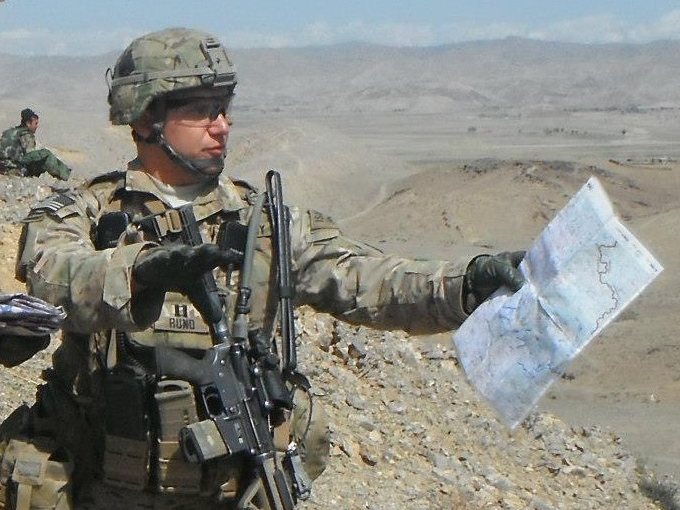
Tyler in the field Tyler served 20 years on active duty. A combat veteran, Purple Heart recipient and three-time Bronze Star recipient, he most recently served as the senior AI technology and data literacy advisor at the U.S. Army Combined Arms Center. He leads the engineering behind VetXpert CRSC, holds a Carnegie Mellon graduate certificate in Data-Driven Leadership and AI, and is completing a PhD at Kansas State University.
Tyler on LinkedIn (opens in a new tab) -

Co-Founder & Chief Executive Officer
Chris Budihas
Colonel, U.S. Army (Retired)
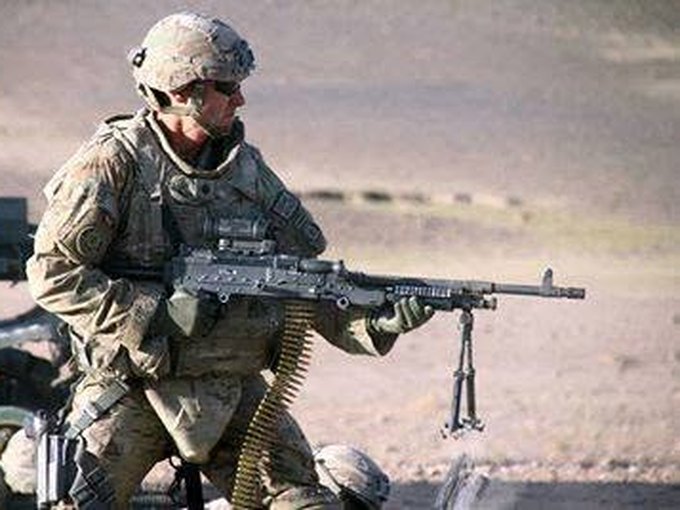
Chris in the field Chris served more than three and a half decades in the U.S. Marines and Army, starting as a private and retiring as a colonel. Back home in Jacksonville he founded AdvantEdge Strategies & Solutions, hosts “First Coast Military Life” on FM 104.5 WOKV and co-hosts the “Frontline Visionaries” podcast. He holds a bachelor's degree from Jacksonville University and master's degrees from Webster University and the School of Advanced Military Studies.
Chris on LinkedIn (opens in a new tab)


Chris and Tyler first served together in Iraq. They have been building together ever since.
Questions
Straight answers.
Is VetXpert CRSC part of DFAS or the military?
No. VetXpert CRSC is private software made by VetXpert Solution. It is not affiliated with, endorsed by or connected to the Department of Defense, DFAS, the Department of Veterans Affairs or any military service.
Do I have to pay to apply for CRSC?
No. Applying is free, and you can apply at any time: fill in DD Form 2860 and send it to the CRSC office of the service you retired from. DFAS explains how on its Applying for CRSC page.
VetXpert CRSC is for people who want help building a complete, well-documented packet.
Who can get CRSC?
Military retirees who are entitled to retired pay, have a VA disability rating of at least 10 percent, have retired pay reduced by their VA compensation, and have at least one disability their service finds combat-related.
That includes 20-year retirees (active, Guard or Reserve, once receiving retired pay), Chapter 61 disability retirees with any number of years, and TERA retirees.
What makes a disability combat-related?
Your service decides each disability on documents that show how it happened. It qualifies when it came from armed conflict, hazardous service, training that simulates war or an instrument of war, or when you received a Purple Heart for it.
VA presumptive conditions (Agent Orange, ionizing radiation, mustard gas or lewisite, the Persian Gulf War and prisoner-of-war status) are strong evidence but not automatic. A service-connected disability is not combat-related on that basis alone.
Do I need a Purple Heart?
No. A Purple Heart is one of five ways a disability can qualify. If you have one, your service needs to see what it was awarded for, so send the initial medical report, the medevac report and your DD 214.
Can I get both CRSC and CRDP?
No. You can receive one or the other, not both. You choose, and you can change your choice during the annual open season, normally in January.
How far back can CRSC be paid?
From the month after you first qualified, as early as June 2003 (January 2004 for ratings under 60 percent, and January 2008 for Chapter 61 retirees with fewer than 20 years).
Since the Supreme Court decided Soto v. United States in June 2025, back pay is not cut off at six years.
Does VetXpert CRSC file my claim for me?
No. You sign the form in ink and send the packet yourself. VetXpert CRSC never signs, never dates the form and never sends anything to your service.
I was denied. Can it still help?
Yes. You can ask your service to reconsider with new or clarifying evidence. After that, you can apply on DD Form 149 to your service's Board for Correction of Military (or Naval) Records, within three years of finding the error; a board can excuse a late application in the interest of justice.
The program's decision step walks you through both.
When can I use it, and what will it cost?
VetXpert CRSC is in early access. Join the list and we will tell you when it opens. Pricing will be published before launch, and joining the list is free.
Early access
Be first to know when it opens.
VetXpert CRSC is in early access. Leave your name and email, and we will tell you when you can start.
Prefer email? Write to info@vetxpertsolution.com.
A question about your claim today? Each service's CRSC office answers questions at no cost. Start with DFAS: Applying for CRSC.